
The Best Drugstore Moisturizers for Every Skin Type in 2026 (Dermatologist-Tested)
I'll be honest, I have access to pretty much any moisturizer on the planet, and my medicine cabinet still has drugstore staples in it. Not because I'm lazy (okay, maybe a little), but because some of the best moisturizers out there genuinely live on the drugstore shelf. No gatekeeping, no $90 price tag, no waitlist.
Every year I get the same DM approximately 400 times: "What drugstore moisturizer should I actually buy?" And every year the answer shifts a little. New formulations drop, old favorites get reformulated (not always for the better), and our collective understanding of what skin actually needs evolves. So here we are: my fully updated, dermatologist-tested picks for 2026, broken down by skin type so you can stop spiraling in the skincare aisle.
The Quick-Glance Cheat Sheet
Short on time? Here's the TL;DR. Scroll down for my actual thoughts on each one.
| Skin Type | Best Pick | Why It Wins |
|---|---|---|
| Sensitive | Avene Tolerance Control | Minimal ingredients, sterile packaging, ultra-calming |
| Dry | Vanicream Daily Facial Moisturizer | Ceramides + hyaluronic acid, zero irritants, derm gold standard |
| Oily / Acne-Prone | La Roche-Posay Toleriane Double Repair | Ceramides + niacinamide, lightweight, restores barrier without heaviness |
| Tretinoin Users | Avene Cicalfate+ Restorative Protective Cream | Copper-zinc complex, calms retinoid irritation, promotes repair |
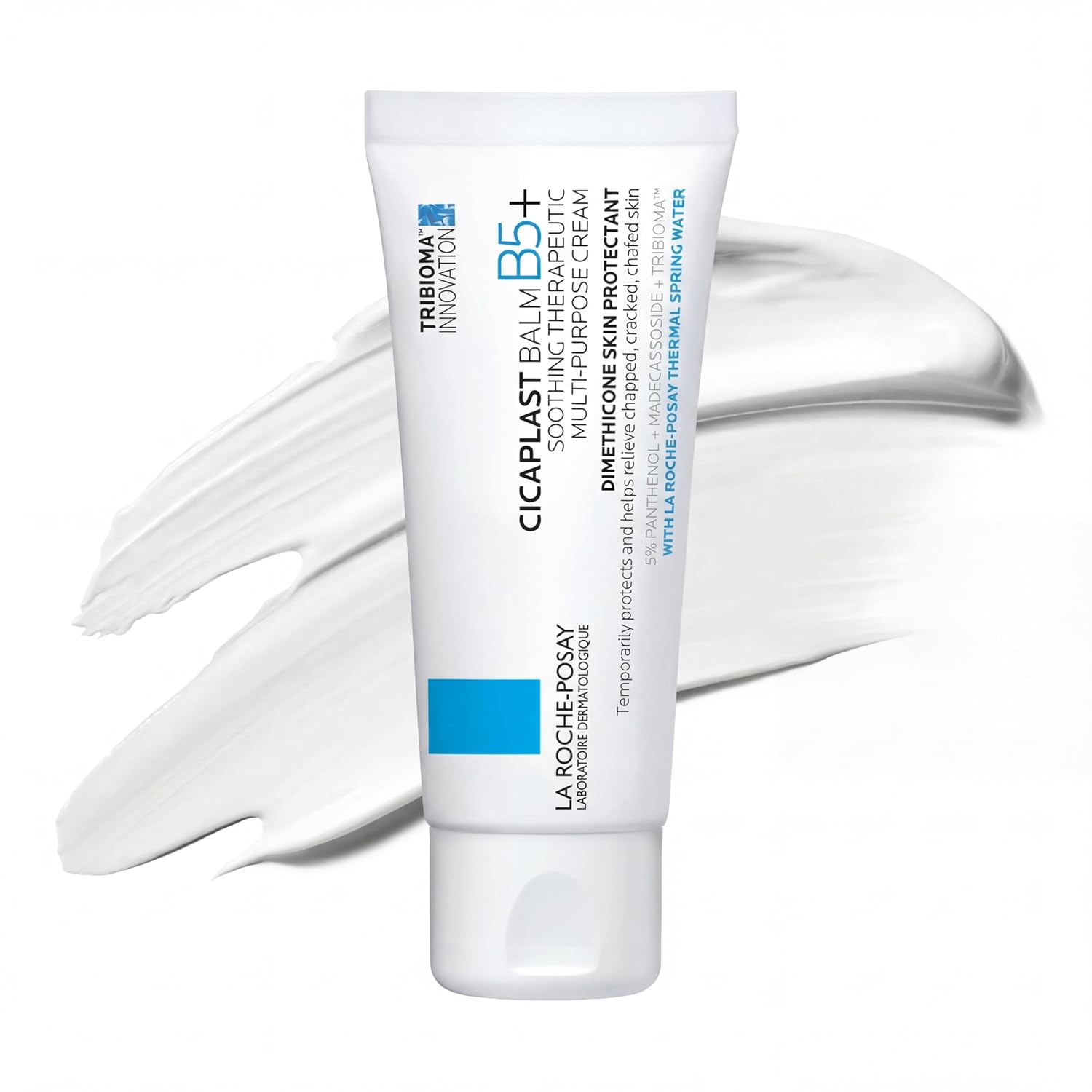
| Barrier Repair | La Roche-Posay Cicaplast Balm B5+ | Madecassoside + panthenol, calms everything |
| Aging | EltaMD AM + PM Restore | Niacinamide + peptides, AM hydrates and protects, PM repairs overnight |
What Actually Matters in a Drugstore Moisturizer
Before I get into the picks, a quick gut-check on what I look for, because the ingredient list matters more than the packaging (no matter how cute it is). The non-negotiables: ceramides for barrier support, humectants like hyaluronic acid or glycerin to pull in water, and ideally some kind of occlusive layer (think petrolatum, dimethicone, or squalane) to seal it all in. Fragrance-free is a bonus for most people, and a hard requirement if your skin is reactive or you're on any kind of active like tretinoin.
What I actively avoid: unnecessary essential oils, denatured alcohol high up on the ingredient list, and anything marketing itself with buzzwords but delivering nothing. You know the ones.
Avene Tolerance Control
If your skin throws a tantrum at basically everything, this is your safe haven. Avene formulated this with an intentionally minimal ingredient list and their signature thermal spring water, which has legit clinical data behind it for calming reactive skin. The sterile packaging (no preservatives needed) is a huge plus if you're the type whose skin rebels against even the "gentle" stuff. I've been reaching for this more and more in 2026, and the feedback from patients with hypersensitive skin has been overwhelmingly positive. Lightweight, soothing, and does exactly what it promises without any drama.
 →
→
Vanicream Daily Facial Moisturizer
Vanicream stripped out every common irritant (no fragrance, no dyes, no parabens, no lanolin) and what's left is a genuinely effective, ceramide-and-hyaluronic-acid formula that just works. I've recommended this to more patients than I can count, and the feedback is always the same: "Why didn't I try this sooner?" It's rich enough to quench seriously parched skin but absorbs cleanly enough that it doesn't sit on top of your face all day. For dry skin that's also reactive, this is the sweet spot.
 →
→
La Roche-Posay Toleriane Double Repair Face Moisturizer
If the words "moisturizer" and "oily skin" in the same sentence make you nervous, I get it, but hear me out. Skipping moisturizer when you're oily or acne-prone is one of the biggest mistakes I see, because a dehydrated barrier actually triggers more oil production. Double Repair is the antidote: ceramides and niacinamide restore the barrier and help with oil balance, while the lightweight texture absorbs without leaving any greasy residue. It layers beautifully under sunscreen and won't clog a single pore. This is the one I hand to patients who say "I don't do moisturizer" and then they never go back.

Avene Cicalfate+ Restorative Protective Cream
If you're in the trenches of tretinoin adjustment, this one's for you. Cicalfate+ uses a copper-zinc complex (sucralfate) that promotes skin repair while creating a protective barrier over compromised skin. When retinoid peeling and irritation are at their peak, you need something that won't sting, won't irritate, and will actually help your skin heal faster. I've used this myself during my own tret journey and it was the cream that finally made the flaking manageable. The texture is rich but not greasy, and it plays well with the sandwich method if that's your approach.
 →
→
→
→
La Roche-Posay Cicaplast Balm B5+
If your skin is angry (post-procedure, over-exfoliated, windburned, irritated from a new active, whatever), Cicaplast is the thing I reach for before anything else. The hero ingredient is madecassoside (a derivative of centella asiatica) combined with panthenol, shea butter, and La Roche-Posay's thermal spring water. It calms redness almost immediately and creates a protective layer while your barrier heals. I've called this my "skin emergency kit in a tube" before and I stand by it. It's technically a balm, not a traditional moisturizer, so I usually layer it over a lighter hydrator.
 →
→
→
→
EltaMD AM + PM Restore
This is actually two products, and I'm recommending both because they work as a system. The AM formula is lightweight with niacinamide and antioxidants to protect during the day, while the PM formula goes heavier on peptides and hyaluronic acid to support overnight repair. What I love about EltaMD's approach here is that each formula is designed for when your skin actually needs it, rather than being one generic cream you use around the clock. They're both fragrance-free, play beautifully with actives, and the AM layers perfectly under sunscreen. If you want a real AM/PM routine without overcomplicating things, this duo makes it easy.

Wait, Why Does My Moisturizer Burn?
I get this question so much that I wrote an entire post about it, but the short version: if your moisturizer burns or stings when you apply it, your skin is usually trying to tell you something. It could be a compromised barrier (especially common if you're using retinoids or AHAs), an allergic reaction to a specific ingredient like fragrance or a preservative, or simply that your skin is dehydrated and the humectants are pulling water from your skin instead of the air.
Occasional mild tingling? Probably fine. Burning every single time? Time to reassess. Start with a stripped-back, fragrance-free option (Avene Tolerance is your friend here) and rebuild from there.
→How I Chose These Picks
A little transparency, because I think it matters: every product on this list is one I've either personally tested on my own skin, recommended in a clinical setting, or both. I'm not swayed by PR packages or brand deals. If something is on here, it's because the formulation is solid, the price makes sense, and real skin responds well to it. I also prioritized products that are widely accessible (you should be able to grab any of these at CVS, Target, or Amazon) and that have stood the test of reformulations and time.
Your Questions, Answered
What's the best drugstore moisturizer for sensitive skin in 2026?
Avene Tolerance is my current top pick. The minimal ingredient list and preservative-free sterile packaging make it ideal for hypersensitive and reactive skin types. Vanicream Daily Facial Moisturizer is a close second if you prefer something with ceramides.
Can I use a drugstore moisturizer with tretinoin?
Absolutely, and I insist on it. Tretinoin compromises the skin barrier, so a rich, fragrance-free moisturizer is essential. I recommend Avene Cicalfate+ for its restorative properties, applied either before tretinoin (the sandwich method) or after.
Is it normal for moisturizer to burn my face?
Occasional mild tingling can happen, especially with new products. But consistent burning usually signals a compromised skin barrier, an ingredient sensitivity, or dehydration. Switch to something ultra-gentle like Avene Tolerance and give your barrier time to heal. I wrote a full post on this if you want the complete breakdown.
Are expensive moisturizers better than drugstore ones?
Not necessarily. Some luxury moisturizers have elegant textures or unique ingredients, but the core science (ceramides, humectants, occlusives) is the same across price points. Every product on this list holds its own against moisturizers that cost 3-5x more. I've tested both ends of the spectrum and my skin genuinely can't tell the difference most of the time.
What's the difference between Cicaplast Balm and Avene Cicalfate+?
Both are excellent for compromised skin, but they work a little differently. Cicaplast leans on madecassoside and panthenol for soothing, while Cicalfate+ uses a copper-zinc complex (sucralfate) that's more repair-focused. I reach for Cicalfate+ during active tretinoin irritation and Cicaplast for general barrier emergencies. You can read my full Cicaplast breakdown here.
What's the best drugstore moisturizer for acne-prone skin?
La Roche-Posay Toleriane Double Repair is my top pick. It's oil-free, non-comedogenic, and the niacinamide helps with oil control and pore appearance while ceramides keep your barrier intact.
The Bottom Line
You don't need to spend a fortune to take good care of your skin, and honestly, some of the most effective formulations in dermatology are sitting right there in the drugstore aisle. Whether you're navigating tretinoin for the first time, dealing with a wrecked barrier, or just want something reliable that won't break you out, there's a solid option on this list for you.
If you're not sure where to start, La Roche-Posay Double Repair is my "when in doubt" recommendation for almost everyone. And if your skin is going through it right now, Avene Cicalfate+ or Cicaplast Balm will get you through the rough patch (literally).
As always, if you have specific skin concerns, I'd love to hear about them in the comments, or check out some of my other posts linked throughout for deeper dives on specific topics. Your skin is worth the research, even if the answer ends up being a $15 tube from Target.